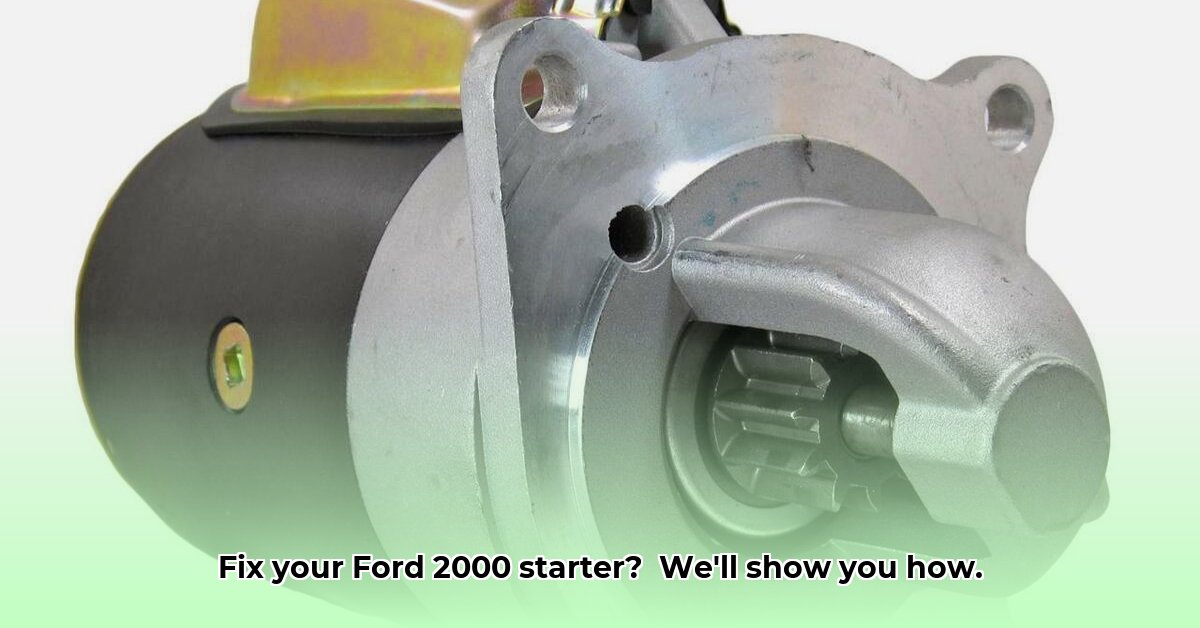
Getting your Ford 2000 tractor back in action after a faulty starter can be frustrating. This guide simplifies the process of finding, sourcing, and installing (or having installed) the correct replacement. Remember: safety is paramount when working with heavy machinery and electrical systems. If you are unsure about any step, consult a qualified mechanic. For more information on Ford tractor specifications, check out this helpful resource: Ford Tractor Specs.
Identifying Your Tractor's Needs: The Detective Work
Before ordering anything, gather essential information about your Ford 2000. This detective work ensures you get the right part the first time.
- Locate the Data Plate: This plate typically displays the model number (e.g., 2000, 2000E) and serial number. Take clear photos – these numbers are your keys to finding the correct starter. The serial number helps to identify the exact build date and potential variations.
- Determine the Engine Type: Identify the engine type (gasoline or diesel). This information is usually found on an engine plate near the engine block. Note down the relevant engine numbers for easy referencing. Incorrect engine identification is problematic, so take your time.
- Check Voltage and Amperage: The voltage is usually 12V, but verifying this is important. Note the amperage rating (if available) to ensure you choose a starter with sufficient power. This detail can be found in your owner's manual or on the original starter.
- Measure Starter Dimensions (Optional): If possible, measure or take photos of your old starter's physical dimensions (length, width, mounting points). This helps ensure the new starter fits correctly.
Sourcing the Starter Motor: OEM, Remanufactured, or Aftermarket?
You'll find three main options for replacement starters:
OEM (Original Equipment Manufacturer): These are parts directly from Ford or authorized dealers. They guarantee perfect fit and longevity but are expensive and harder to find for older tractors. Think of these as the gold standard for reliability.
Remanufactured Starters: These are your old starter rebuilt to factory specifications. They're a good balance between cost and quality, often more affordable than OEM options.
Aftermarket Starters: These are widely available and generally the cheapest option. However, quality varies significantly. Thorough research is key to finding a reliable aftermarket starter. Always check reviews and ratings from other users.
Where to Buy: Reputable online agricultural parts suppliers specializing in older tractors are an excellent resource. Always check their return policies and customer reviews before ordering.
Compatibility Considerations: Avoiding Costly Mistakes
Selecting the wrong starter can damage your tractor's electrical system, potentially leading to short circuits or fires. Don't cut corners!
- Cross-Reference Part Numbers: Always compare your tractor's model and serial numbers with the starter's specifications.
- Verify Voltage and Amperage: Make sure the voltage and amperage match your tractor's requirements.
- Check Mounting Points: Ensure the mounting points on the new starter align perfectly with those on your tractor.
- Compare Wiring Connections: The wiring connections must be identical. Mismatched connectors are a big risk.
Why is precise identification so critical? Using an incompatible starter is like trying to fit a square peg into a round hole – it simply won't work and may cause significant damage.
Installation: DIY or Professional Help?
Installing a starter involves working with high voltage and heavy machinery. If you lack experience with electrical systems or heavy equipment, strongly consider hiring a professional mechanic. Attempting installation without the proper knowledge and tools can lead to accidents or further damage to your tractor.
If you proceed with DIY installation (at your own risk): consult a repair manual specific to your Ford 2000 tractor. Remember to disconnect the negative battery terminal before starting any electrical work.
Troubleshooting and Preventative Maintenance
Even with a new starter, issues can arise. Common problems include:
- Faulty Solenoid: This electrical switch controls the starter's engagement.
- Worn Starter Brushes: These components wear out over time.
- Dead Battery: A weak battery can prevent your starter from working correctly.
Preventative Maintenance:
- Regularly inspect battery connections and clean them with a wire brush. Corrosion can prevent proper electrical contact.
- Periodically lubricate the starter's moving parts. This reduces friction and improves lifespan.
Preventative maintenance significantly reduces the risk of starter failure and extends the life of your starter motor, helping to save you money in the long run. A little preventative maintenance goes a long way in ensuring a long and productive life for your tractor.
Conclusion: Back to Work!
Replacing a Ford 2000 tractor starter requires careful attention to detail. Accurate identification of your tractor's specifications, careful selection of a compatible starter, and a cautious approach to installation (or choosing professional help) are crucial. Preventative maintenance is essential for prolonging the life of your starter and your tractor, saving you time and money in the long run. Remember, safety always comes first.